

Table of Contents
- What Does a Panic Attack Feel Like? A Moment-by-Moment Look
- Panic Attack Symptoms: Physical Signs Your Body Is in Fight-or-Flight
- Emotional and Cognitive Symptoms: What Goes On in Your Mind
- How Long Does a Panic Attack Last?
- How to Stop a Panic Attack: Step-by-Step Response
- Panic Attack vs Anxiety Attack: Key Differences
- Panic Attack or Medical Emergency? When to Seek Urgent Care
- What to Do After a First Panic Attack
- Frequently Asked Questions
Last Updated: October 7, 2026
What Does a Panic Attack Feel Like? A Moment-by-Moment Look
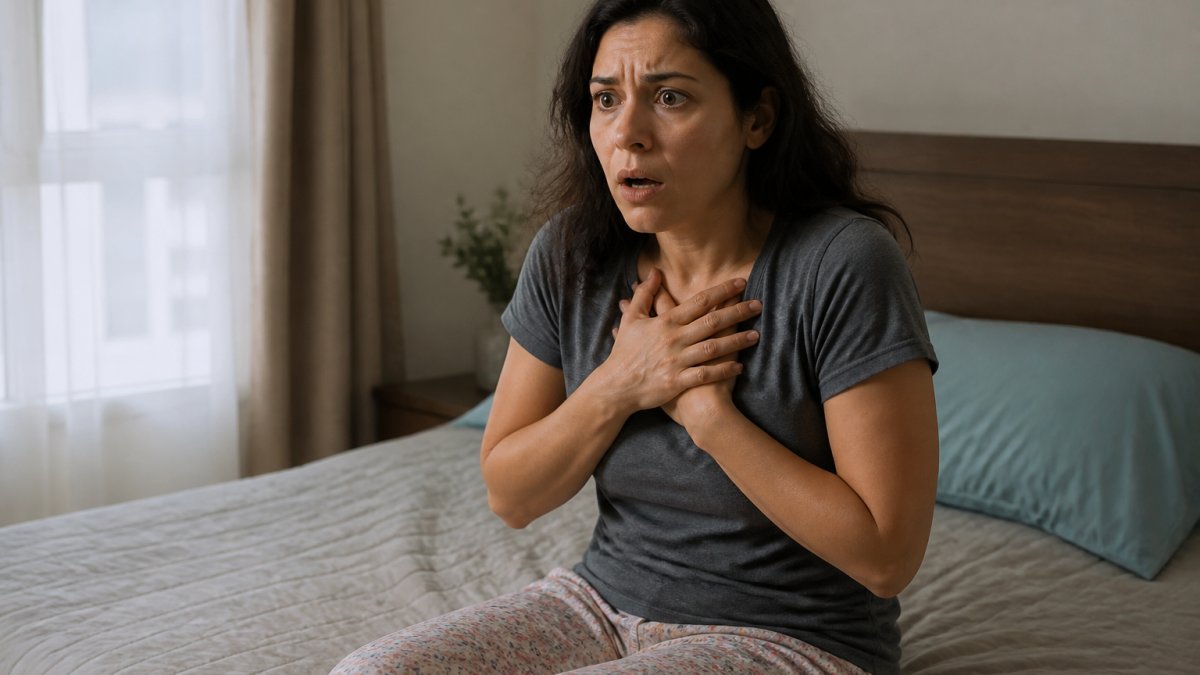
A panic attack feels like a sudden surge of intense fear that floods your body before your mind can catch up. The American Psychological Association’s anxiety resources describes it as an abrupt rush of overwhelming discomfort that peaks within minutes.
The First 60 Seconds
The first minute is often the strangest. Your heart starts pounding out of nowhere. Your chest tightens. Your vision may narrow or blur at the edges. Many people describe a wave of heat or a cold flush moving through the body, followed by the urgent sense that something is very wrong. The surge is driven by adrenaline, the same chemical your body releases in real danger.
The Peak: When Fear Takes Over
The peak usually arrives within 10 minutes. This is when the fear of losing control or fear of dying feels most real. Your thoughts may spiral: “I’m having a heart attack.” “I can’t breathe.” “I need to get out of here.” The physical and emotional symptoms feed each other, which is why the panic cycle can feel impossible to interrupt from the inside.
Panic Attack Symptoms: Physical Signs Your Body Is in Fight-or-Flight
Panic attack symptoms are your body’s fight-or-flight response firing when there is no real threat. The National Institute of Mental Health’s panic disorder overview explains that this response is designed to protect you, not harm you, even when it feels unbearable. Understanding why each symptom happens can make the experience less terrifying, because the sensations stop feeling random and start feeling like a predictable chain of events.
What Happens Inside Your Body
When your brain perceives danger, it releases adrenaline (epinephrine) into your bloodstream. Adrenaline does a handful of specific things, and each one maps directly onto a symptom you feel:
- Your heart rate and blood pressure rise. Adrenaline tells your heart to pump faster so your muscles get more oxygen. You feel this as a racing, pounding, or fluttering heartbeat.
- Your breathing speeds up. You start taking faster, shallower breaths to pull in more oxygen. This is the breathlessness or feeling of being smothered.
- Your blood flow shifts. Blood moves away from your digestive system and skin and toward your large muscles. That shift can cause tingling or numbness in the hands, feet, and face, plus a cold or clammy feeling.
A common pattern is that the physical sensations and the fearful thoughts feed each other. Your heart pounds, you think “something is wrong with me,” that thought triggers more adrenaline, and the cycle intensifies. This is sometimes called the fear-of-fear cycle, and it is a big reason a panic attack can feel impossible to interrupt from the inside.
Common Physical Signs
- Racing or pounding heart
- Shortness of breath or breathlessness
- Chest discomfort or tightness
Symptoms vary from person to person, and even between attacks in the same person. Some people get the full set. Others get two or three. A person who has had several attacks may notice the pattern shifts, one attack centers on chest tightness, the next on dizziness. That variation is normal and does not mean the diagnosis is wrong.
Because the symptoms are driven by adrenaline, they tend to peak and then fade on their own. Your body cannot sustain that level of arousal for long. Knowing the chemistry can help you ride it out instead of fighting it.
Emotional and Cognitive Symptoms: What Goes On in Your Mind
The emotional side of a panic attack is just as intense as the physical side. You may feel overwhelming unease, dread, or terror. Many people report a fear of losing control, going crazy, or dying. Thoughts spiral fast, and it becomes hard to think clearly or speak. Some people feel detached from their body, like they are watching themselves from outside.
A silent panic attack can happen with few visible signs. Someone may look calm on the outside while their heart races and their thoughts spiral. Never assume that a composed face means a calm mind.
How Long Does a Panic Attack Last?
Most panic attacks last between 5 and 20 minutes, though the peak intensity usually passes within 10 minutes. The Cleveland Clinic’s panic attack guide notes that some attacks can last up to an hour, and the after-effects, like exhaustion, shakiness, or lingering unease, can stretch for hours. The duration is one of the key differences between a panic attack and ongoing anxiety, which can hum in the background for days or weeks.
How to Stop a Panic Attack: Step-by-Step Response
You cannot always stop a panic attack once it starts, but you can shorten it and reduce its intensity. Here is a step-by-step response to consider:
- Name it out loud: “This is a panic attack. It will pass.”
- Plant your feet and press them into the floor.
- Slow your exhale. Make it longer than your inhale.
- Pick one thing to look at and describe it in detail.
- Stay where you are if it is safe. Do not run.
- Call someone if you need a calm voice.
- Ride the wave. Do not fight it.
The 3-3-3 Grounding Technique
The 3-3-3 grounding technique is a fast way to pull your mind out of the spiral. Look around and name three things you can see. Then name three sounds you can hear. Then move three parts of your body, like your fingers, shoulders, and toes. It sounds simple. That is the point. When your thoughts are racing, simple is what works.
Breathing That Calms Your Nervous System
Breathing that calms your nervous system means making your exhale longer than your inhale. Try breathing in for a count of four, holding for four, and breathing out for six to eight. Do not force it. If you feel lightheaded, shorten the counts. The goal is not perfect breathing. The goal is to signal safety to your body.
A common mistake is trying to “breathe deeply” by taking big gulps of air. That can make tingling and dizziness worse. Slow, gentle exhales work better than big inhales.
Panic Attack vs Anxiety Attack: Key Differences
A panic attack is sudden and peaks within minutes, while an anxiety attack usually builds gradually and lasts longer. Anxiety attacks are not a formal diagnosis, but the term is often used to describe a slow build of worry, tension, and unease. Panic attacks have a clear onset and a clear peak. Anxiety tends to hum in the background. Both are real.
| Feature | Panic Attack | Anxiety Attack |
|---|---|---|
| Onset | Sudden, no warning | Gradual build |
| Peak | Within 10 minutes | Hours or days |
| Duration | 5-20 minutes | Ongoing |
| Intensity | Extreme fear | Rising worry |
| Trigger | Often none | Usually present |
Panic Attack or Medical Emergency? When to Seek Urgent Care
Sometimes panic symptoms overlap with real medical problems. Chest pain, breathlessness, and dizziness can be signs of a panic attack, or they can be signs of a heart attack, a pulmonary embolism, an asthma attack, or a thyroid issue. Because the sensations are so similar, the safest rule is simple: if you are not sure, treat it as a medical emergency first.
Red Flags That Point Away From Panic
Panic attacks are not dangerous, but they can look like conditions that are. Call 911 or go to the nearest emergency room if you notice any of the following:
- Chest pain or pressure that spreads to your arm, jaw, neck, or back
- Fainting or loss of consciousness
- Confusion, trouble speaking, or trouble understanding speech
Why the Overlap Exists
Panic attacks and heart attacks share several symptoms because both involve the body’s stress response and the cardiovascular system. A panic attack can cause real chest tightness and a racing heart. A heart attack can cause real fear and breathlessness. That is why emergency doctors routinely run tests, an electrocardiogram, blood work, sometimes a chest X-ray, to rule out cardiac and lung causes before settling on a panic diagnosis.
A Practical Safety Plan
If you have had panic attacks before and a new one feels different, do not assume it is “just panic.” Use this framework:
- If symptoms match the red flags above, call 911. Do not drive yourself.
- If symptoms are familiar and fade within 20 minutes, use your coping skills and note the episode.
- If symptoms are new, different, or you are unsure, get evaluated. An urgent care or emergency visit is a reasonable choice.
- After any emergency visit, follow up with your primary care provider to review what was ruled out and what was found.
Do not use a past panic attack diagnosis to explain away new or changing symptoms. The body can have both panic attacks and a medical condition. One does not cancel out the other.
You do not have to figure out on your own whether it is panic or something else. Emergency doctors and your primary care provider can help rule out medical causes. That is not overreacting. It is smart.
What to Do After a First Panic Attack
The hours and days after a first panic attack matter. Many people feel shaken, embarrassed, and afraid it will happen again. That fear can grow into a pattern. Here is what helps:
- Write down what happened while it is fresh.
- Note what you were doing, feeling, and thinking before it hit.
- Tell one person you trust.
At Penny For Your Thoughts Counseling Florida, LLC, we help people understand what their panic attacks are telling them. Our spa-like setting in Longwood gives you room to slow down, and our free 20-minute consultation lets you ask questions before you commit. We also offer virtual reality therapy, which gives clients a safe way to practice calming skills in controlled settings.
Frequently Asked Questions
How do I tell if I had a panic attack?
A panic attack is a sudden surge of intense fear that peaks within minutes and comes with at least four physical or cognitive symptoms, such as a racing heart, shortness of breath, sweating, dizziness, or a fear of losing control. If the episode felt like a wave that crashed and then receded, and you were left shaken but physically safe, it was likely a panic attack. A licensed mental health professional can confirm the diagnosis and rule out other conditions.
What is the 3-3-3 rule for panic attacks?
The 3-3-3 rule is a grounding technique you can use during a panic attack. Name three things you can see, three sounds you can hear, and move three parts of your body, such as your fingers, shoulders, or feet. This shifts your attention away from spiraling thoughts and back to the present moment, which can help interrupt the fight-or-flight response. It is simple enough to remember even when your mind feels overwhelmed.
Can a panic attack happen without feeling afraid?
Yes. Some people experience what is sometimes called a silent panic attack, where the physical symptoms, like a pounding heart, chest discomfort, or dizziness, show up without obvious feelings of fear. This can happen because the body’s alarm system activates before the mind registers the emotion. If you notice repeated episodes of unexplained physical symptoms, talk with a healthcare provider to rule out other causes and get an accurate diagnosis.
How can I tell a panic attack from a medical emergency?
Panic attack and heart attack symptoms overlap, so it can be hard to tell them apart. Chest pain that spreads to your arm, jaw, or back, fainting, or symptoms that do not improve after 20 minutes may signal a medical emergency. If you are unsure, call 911 or go to the nearest emergency room. It is always better to get checked than to assume it is only anxiety. Once a medical cause is ruled out, a mental health professional can help you manage panic attacks.
Panic attacks can make you feel like your own body has turned against you. It has not. It is responding to a false alarm, and that response can be retrained. At Penny For Your Thoughts Counseling Florida, LLC, we build a personalized plan around your specific triggers, history, and goals. With a safe, spa-like space, virtual reality therapy, and a free 20-minute consultation, we make the first step easy. Contact us today and start finding your way back to balance.
Recent Comments