

Last Updated: October 23, 2026
Quick Summary
What to do for panic is to ride it down rather than fight it: check for danger signs first, then lengthen your exhale so each breath out is longer than the breath in, name five things you can see, move to a quieter spot, and call a support person if being alone makes it worse. A panic attack peaks within minutes, so the goal is to help your body settle, not to stop it by force.
- Breathe in for four counts and out for six, because the long exhale signals safety to your nervous system.
- Name five things you can see, four you can touch, three you can hear, two you can smell, and one you can taste.
- Splash cool water on your face, press a cold cloth to your neck, or hold an ice pack to interrupt a panic loop.
- Call 911 for chest pain spreading to the arm, jaw, or back, fainting, or trouble breathing that does not ease.
- After an attack, rest, drink water, skip caffeine and alcohol, and log the pattern for two to four weeks.
Table of Contents
- What to Do for Panic: First Steps That Actually Help
- How to Calm Down During a Panic Attack
- Panic Attack Grounding Techniques for Racing Thoughts
- How to Help Someone Having a Panic Attack
- What to Do After a Panic Attack: Aftercare and Rest
- Panic Attack vs. Medical Emergency: When to Seek Urgent Care
- When to Seek Professional Help for Recurring Panic Attacks
- Frequently Asked Questions
What to Do for Panic: First Steps That Actually Help
Panic can feel like it comes out of nowhere, but what you do in the first minute matters. At Penny For Your Thoughts Counseling Florida, LLC, we tell people the same thing: you do not need to fight a panic attack.
Below, we walk through exactly what to do for panic, step by step, including how to tell a panic attack from a medical emergency.
A Quick In-the-Moment Decision Tree
When panic hits, you need a simple path, not a long list. Use this order:
- Check for danger signs first. Crushing chest pain, fainting, or trouble breathing that does not ease? Call 911.
- If it feels like panic, slow your exhale. Make each breath out longer than the breath in.
- Name five things you can see. This pulls your attention out of the spiral.
- Move to a quieter spot if you can, and loosen tight clothing.
- Call a support person if being alone makes it worse.
The fastest way to slow a racing heart is a long exhale, not a deep inhale. Breathe in for four counts, out for six. The out-breath is what signals safety to your nervous system.
How to Calm Down During a Panic Attack
To calm down during a panic attack, start with your breath and your senses, not your thoughts. The National Institute of Mental Health guidance on panic disorder notes that panic symptoms are real and treatable, which is worth remembering mid-attack.
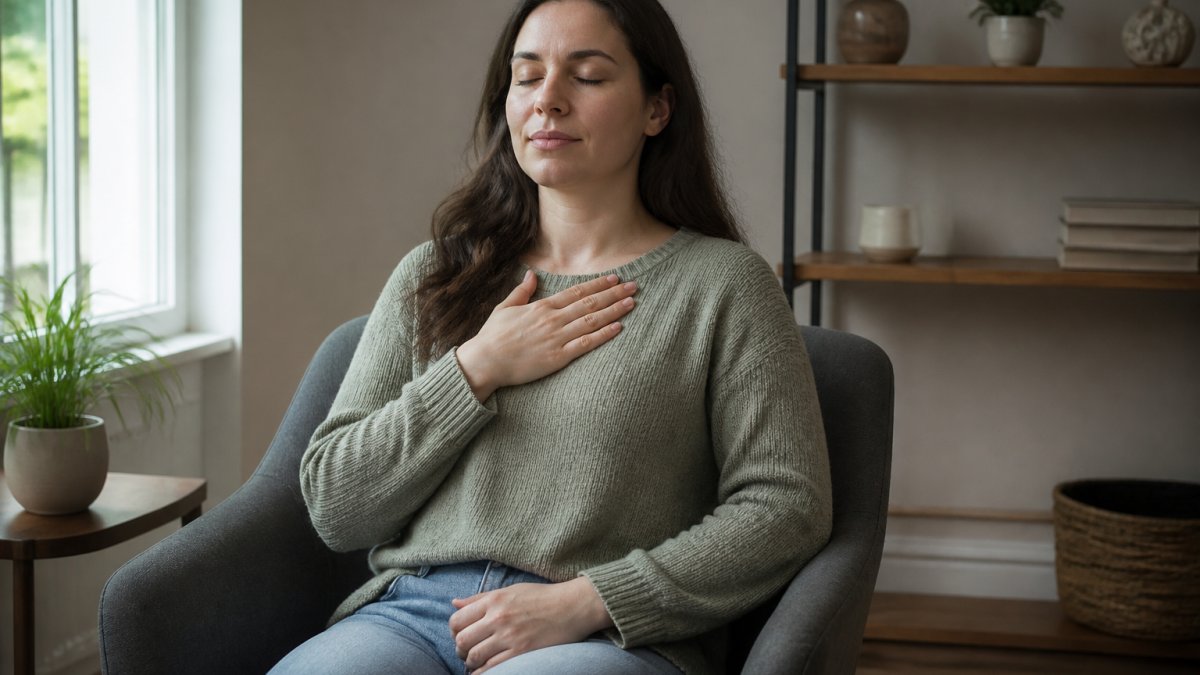
Breathing Techniques That Work: Box Breathing and Beyond
Box breathing is a simple, steady pattern: inhale for four counts, hold for four, exhale for four, hold for four. Repeat it several times. If holding your breath feels uncomfortable, skip the holds and just lengthen your exhale. The point is rhythm, not perfection.
Cool Water, Cold Cloth, and Other Sensory Resets
Cold can interrupt a panic loop. Splash cool water on your face, press a cold cloth to your neck, or hold an ice pack. Gentle movement, like a slow walk, also helps burn off the adrenaline. These are simple resets, not cures, and they work best when you use them early.
Panic Attack Grounding Techniques for Racing Thoughts
Grounding techniques for panic attacks work by anchoring you to the present moment. Racing thoughts feed on “what if.” Grounding replaces that with “what is.” Try these:
- Press your feet firmly into the floor and notice the pressure.
- Describe one object near you in detail.
- Say the date and time out loud.
The 5-4-3-2-1 Technique and Sensory Awareness
The 5-4-3-2-1 technique uses sensory awareness to pull you back. Name five things you can see, four you can touch, three you can hear, two you can smell, and one you can taste. Go slowly. The slower you go, the more your mind has to focus on the present.
Progressive Muscle Relaxation and Gentle Movement
Progressive muscle relaxation means tensing a muscle group for a few seconds, then releasing it, working from your toes to your face. It teaches your body the difference between tight and relaxed. Pair it with gentle movement, like stretching or a short walk, to release built-up tension.
A common mistake is trying to “think your way out” of a panic attack. Arguing with your thoughts usually makes them louder. Ground your body first, then address the thoughts once you are calmer.
How to Help Someone Having a Panic Attack
To help someone having a panic attack, your job is to lower the temperature of the room, not to fix the person. Stay calm, keep your voice low and steady, and move slowly.
Start by asking one short question: “Do you want me to stay close, or give you space?” Some people want quiet company; others need to be alone for a few minutes.
A Simple Script That Works
You do not need perfect words. Short, declarative sentences help more than questions that require the person to think.
- “I’m here. You’re not alone.”
- “This is panic. It will pass. I’m not going anywhere.”
- “Let’s breathe out together. Long exhale. That’s it.”
Avoid “just calm down,” “you’re overreacting,” or “there’s nothing to be afraid of.” Those lines tell the person their experience is wrong, and they usually add shame on top of fear. Avoid asking “what happened?” mid-attack too, the person often cannot answer, and the question pulls them back into the spiral.
Match Your Body to Theirs
If they are pacing, do not block them; walk alongside at their pace and gradually slow. If they are frozen, sit at their eye level rather than standing. Offer a hand only if they reach for one. Narration helps: “I’m going to open this window. I’m going to get you some water.” Predictable, low-stakes actions give the brain something safe to track.
When to Escalate
Helping someone does not mean diagnosing them. If the person has chest pain that spreads to the arm, jaw, or back, faints, has trouble breathing that does not ease, or describes this as the worst episode of their life, call 911.
After the attack, check in briefly rather than debriefing at length. “That looked really hard. Do you want water, or do you want to rest?” Then follow their lead.
Never restrain a person during a panic attack or force them to breathe in a specific way. Restriction can intensify the fight-or-flight response and damage trust. Offer, demonstrate, and let them choose.
What to Do After a Panic Attack: Aftercare and Rest
After a panic attack, your body needs recovery time. Aftercare matters as much as the attack itself. The surge of adrenaline and the heavy breathing leave many people shaky, sweaty, and exhausted for an hour or more, and some feel a lingering sense of unreality. That aftermath is normal, not a sign that something else is wrong.
The First 30 Minutes
- Sit or lie down somewhere quiet. Do not drive until you feel steady.
- Drink water and eat something light if you can. Low blood sugar can make the shakes worse.
- Change out of damp clothing if you sweated through it; being cold prolongs the shaky feeling.
Track the Pattern, Not Just the Attack
A single panic attack is common and often does not repeat. Repeated or unexpected attacks are worth tracking, because patterns are what clinicians use to decide whether this is panic disorder or something else. Keep a simple log for two to four weeks:
- Date, time, and where you were
- What you were doing and who was with you
- The first physical sensation you noticed
That last line matters most. Avoidance, skipping the meeting, refusing the drive, canceling the dinner, is the behavior that keeps panic alive over time. Naming it in a log makes it easier to bring to a therapist.
Prepare for the Next One
Preparation is not pessimism; it is what turns a future attack from a crisis into a manageable event. Write a short card or phone note with your own steps: the long exhale, one grounding cue that works for you, the name of a person to call, and the warning signs that mean call 911. Keep it where you can reach it quickly.
When to Arrange Follow-Up Care
Reach out to a clinician if attacks repeat, if you start avoiding places or situations to prevent them, if worry about the next attack takes over your days, or if the aftercare is not restoring you between episodes.
If cost or access is a barrier, the Substance Abuse and Mental Health Services Administration treatment locator lists low-cost and sliding-scale options, and the 988 Suicide & Crisis Lifeline is available by call or text if things feel unmanageable between appointments.
Aftercare has two jobs: settle the body today, and shrink the chance that avoidance takes over tomorrow. Rest first, then log what happened, then decide on one small follow-up step.
Panic Attack vs. Medical Emergency: When to Seek Urgent Care
A panic attack and a medical emergency can feel alike, so knowing the difference matters. Panic symptoms like a racing heart, shortness of breath, chest tightness, dizziness, shaking, and sweating overlap with heart and breathing problems. That overlap is exactly why you should not self-diagnose.
Call 911 or seek urgent care if you have:
- Chest pain that spreads to your arm, jaw, or back
- Fainting or near-fainting
- Trouble breathing that does not ease with slow breathing
If you are unsure, get checked. A medical evaluation is never a waste.
When in doubt, treat it as medical. A panic attack will not be harmed by a checkup, but a heart problem ignored as “just anxiety” can be dangerous.
When to Seek Professional Help for Recurring Panic Attacks
Seek professional help when panic attacks repeat, when you start avoiding places or situations to prevent them, or when worry about the next attack takes over your days. Repeated attacks can point to panic disorder, and that is treatable.
Treatment often includes therapy such as cognitive behavioral therapy, and sometimes medication like selective serotonin reuptake inhibitors, guided by a qualified provider. The Anxiety and Depression Association of America resources on panic disorder and the Substance Abuse and Mental Health Services Administration treatment locator are good starting points for finding support.
At Penny For Your Thoughts Counseling Florida, LLC, we offer a free 20-minute consultation so you can ask questions before committing.
| Situation | Best First Step | Follow-Up |
|---|---|---|
| Sudden panic, no danger signs | Slow exhale, grounding | Rest and aftercare |
| Chest pain or fainting | Call 911 | Medical evaluation |
| Attacks keep returning | Book a consultation | Therapy or medication review |
| Helping a loved one | Stay calm, offer reassurance | Encourage professional support |
Frequently Asked Questions
How can I calm someone down during a panic attack?
Stay calm and speak in short, simple sentences. Remind them the panic attack will pass and that you are there. Ask before touching them, then guide them through slow breathing or the 5-4-3-2-1 grounding technique. Move them to a quieter place with less stimulation if possible. Avoid saying ‘just relax’ or asking them to stop. After the peak, offer water and help them rest. If symptoms suggest a medical emergency, such as chest pain radiating to the arm or fainting, call 911.
What should I do after a panic attack?
After a panic attack, rest and reduce stimulation. Drink water, sit somewhere quiet, and let your body recover. Gentle movement like a short walk can help release leftover adrenaline. Write down what happened, including any triggers, to spot patterns over time. Reach out to a support person if you can. If attacks recur or you worry about having another, talk with a licensed therapist about cognitive behavioral therapy and other options.
When should I seek professional help for panic attacks?
Seek professional help if panic attacks recur, if you avoid places or situations for fear of another attack, or if they interfere with work, sleep, or relationships. A licensed therapist can assess whether you meet criteria for panic disorder and discuss treatments like cognitive behavioral therapy, selective serotonin reuptake inhibitors, and other antidepressants. If you are unsure, a free consultation with a counselor can help you decide the next step.
How do I know if it’s a panic attack or a medical emergency?
Panic attack symptoms like a racing heart, shortness of breath, dizziness, chest tightness, shaking, and sweating can mimic heart or lung problems. Get emergency help if chest pain spreads to the arm or jaw, you faint, have seizure-like activity, or symptoms start suddenly with no prior anxiety. If you have recurring attacks and have been evaluated before, your pattern may be known. When in doubt, call 911. A clinician can help you tell the difference.
Panic attacks are frightening, but they are not a sign of weakness, and you do not have to manage them alone. If panic is shaping your days, Penny For Your Thoughts Counseling Florida, LLC can help you break old patterns and find steadier ground. We offer virtual reality therapy, a calm and safe environment, and a personalized plan built around your goals. Contact us now to schedule your free 20-minute consultation and take the first step toward the balance you want.

Recent Comments