

Table of Contents
- Anxiety vs Panic: Key Differences at a Glance
- What Anxiety Actually Feels Like
- Symptoms of a Panic Attack: What Happens in the Body
- Panic Attacks vs Panic Disorder: Why the Distinction Matters
- Chronic Anxiety Management Techniques That Work
- Grounding Exercises for Panic: Steps to Use in the Moment
- When to Seek Professional Help
- Conclusion: Understanding the Difference Is the First Step
- Frequently Asked Questions
Last Updated: October 9, 2026
Anxiety vs Panic: Key Differences at a Glance
Anxiety and panic overlap in how they feel, but they are not the same thing. Anxiety is a longer-lasting state of worry about a threat that may be real or imagined. Panic is a sudden, intense surge of fear that peaks within minutes. At Penny For Your Thoughts Counseling Florida, LLC, we hear this question often.
Here is the short version: anxiety builds, panic erupts.
The two terms get used interchangeably in everyday talk. That habit causes confusion. It can also delay the right kind of help. Understanding the difference between anxiety and panic starts with one core idea: timing and intensity.
Comparison Table: Anxiety vs Panic Attacks
| Feature | Anxiety | Panic Attack |
|---|---|---|
| Onset | Gradual, builds over time | Sudden, often without warning |
| Peak | Hours to days | Within minutes |
| Duration | Ongoing, can last weeks | Usually 10-20 minutes |
| Trigger | Often identifiable stressor | Sometimes no clear trigger |
| Main feeling | Persistent worry, dread | Intense fear, impending doom |
| Physical signs | Muscle tension, restlessness | Racing heart, shortness of breath |
That table captures the broad strokes. The lived experience is messier, and that is worth unpacking.
What Anxiety Actually Feels Like
Anxiety is a state of ongoing worry that lingers, even when no immediate threat exists. It tends to sit in the background and color everything. You might feel restless, on edge, or unable to relax. Your mind may loop through worst-case scenarios.
Common signs of anxiety include:
- Trouble concentrating or feeling keyed up
- Muscle tension, headaches, or stomach issues
- Sleep problems and constant fatigue
- Irritability and a sense of dread
The distress is real, but it usually builds slowly. Many people describe it as a low hum they cannot turn off. The American Psychological Association’s overview of anxiety explains that this kind of worry often attaches to everyday concerns like work, health, or relationships.
Anxiety also fuels avoidance. You might skip social events or put off tasks to dodge the discomfort. That pattern tends to make things worse over time.
The key marker of anxiety is duration. If worry sticks around for weeks and follows you into most days, that points to anxiety rather than a panic episode.
Symptoms of a Panic Attack: What Happens in the Body
A panic attack is a sudden surge of intense fear that peaks within minutes, even when there is no real danger. The body flips into a full fight-or-flight response. Your heart pounds, your breathing gets shallow, and your thoughts race.
Physical symptoms of a panic attack often include:
- Racing or pounding heart
- Shortness of breath or a choking feeling
- Sweating, chills, or hot flashes
- Numbness or tingling in the hands
- Chest tightness or discomfort
- Dizziness or a feeling of unreality
Emotional and cognitive symptoms can be just as strong. Many people feel a sense of impending doom, like something terrible is about to happen. Some fear they are losing control or having a heart attack.
The National Institute of Mental Health on panic disorder notes that these episodes often strike without a clear trigger. That unpredictability is part of what makes them so frightening. The peak intensity usually hits fast, then fades within minutes.
Panic Attacks vs Panic Disorder: Why the Distinction Matters
A panic attack is an event. Panic disorder is a diagnosis. That difference matters for treatment, and it is one of the most common points of confusion for people searching this topic.
Many people have one or two panic attacks in their life and never develop a lasting problem. Panic disorder is different.
Someone with panic disorder may start dodging places where a past attack happened. The Anxiety and Depression Association of America on panic disorder describes this cycle of fear and avoidance as a hallmark of the condition.
It helps to separate three related ideas:
- Panic attack: a discrete surge of intense fear that peaks within minutes. It can occur in panic disorder, in other anxiety conditions, or on its own.
- Panic disorder: a pattern of recurrent, unexpected panic attacks followed by persistent worry or behavior change lasting at least a month.
- Situational panic: attacks reliably triggered by a specific cue, such as a phobia. These do not by themselves meet the criteria for panic disorder.
That last distinction is why a clinician asks about timing and triggers, not just symptoms.
This is also where medical evaluation matters. Some physical conditions can mimic panic symptoms. These include thyroid problems, heart rhythm issues, low blood sugar, and certain medication effects.
Do not assume chest pain or shortness of breath is “just anxiety.” Seek medical care for new or severe symptoms. A heart or lung problem can look a lot like a panic attack, and only a doctor can tell the difference.
How to Track Patterns Before a Clinical Appointment
A short written record makes a clinical conversation far more productive. Most practitioners find that patients who arrive with concrete notes get to a working diagnosis faster than those who describe episodes from memory alone.
For each episode, note:
- Onset: what you were doing and whether a trigger was obvious
- Duration: roughly how long the peak lasted and when it fully faded
- Symptoms: the specific physical and cognitive signs you noticed
- Impact: what you avoided or could not do afterward
- Frequency: how many episodes in the past month
A simple note on your phone works. The goal is not a perfect log. It is a pattern a clinician can read. Bring the notes to the first appointment and mention any medical conditions, medications, or caffeine and alcohol use, since those can shape both symptoms and treatment choices.
Chronic Anxiety Management Techniques That Work
Chronic anxiety management works best as a set of daily habits, not a single fix. The goal is to lower your baseline so worry has less room to build.
Techniques many people find helpful:
- Regular movement. A brisk walk most days can ease tension and improve sleep.
- Consistent sleep and wake times. Steady routines calm the nervous system.
- Limiting caffeine and alcohol. Both can spike anxiety symptoms.
- Scheduled worry time. Set aside 15 minutes to write down worries, then stop.
- Slow breathing. A longer exhale signals safety to the body.
The CDC’s guidance on managing stress points to sleep, physical activity, and social connection as core supports for mental health. Small, repeatable habits beat big overhauls you cannot sustain.
What most guides miss is that consistency matters more than intensity. Ten minutes of breathing every day beats an hour once a month.
Grounding Exercises for Panic: Steps to Use in the Moment
Grounding exercises for panic are simple sensory tasks that pull your attention back to the present. They work because panic thrives on future-focused fear. Grounding interrupts that spiral by giving your mind a concrete task that competes with the racing thoughts.
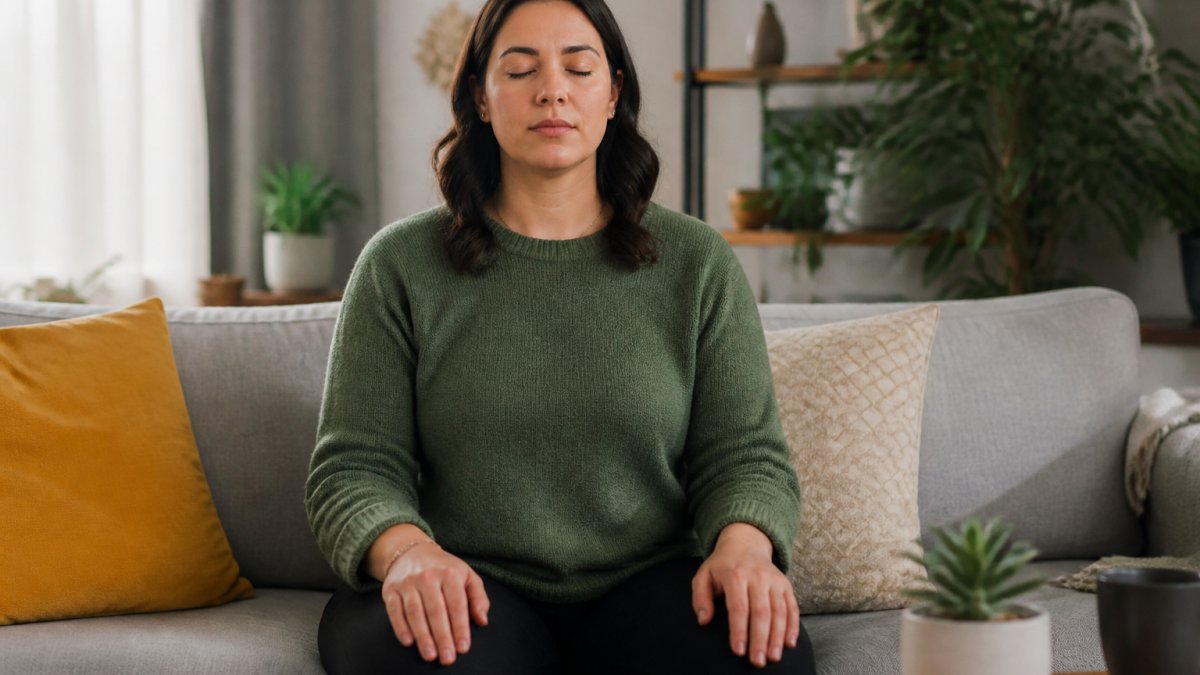
Try this 5-4-3-2-1 method during an episode:
- Name 5 things you can see
- Notice 4 things you can touch
- Identify 3 things you can hear
- Find 2 things you can smell
- Name 1 thing you can taste
Other options that help:
- Press your feet firmly into the floor and notice the pressure
- Hold something cold, like an ice cube, in your hand
- Name the objects in the room out loud
- Slow your breathing with a longer exhale than inhale
These steps will not stop a panic attack instantly. They give your mind a task, which can shorten the peak. Practice them when you are calm so they feel automatic when you need them.
Build a small “panic kit” before you need it. A note card with your grounding steps, a cold water bottle, and a favorite song can give your hands and mind something to do.
What Grounding Cannot Do
Grounding is a coping tool, not a treatment. It does not replace clinical care, and it is not a substitute for medical evaluation when symptoms are new, severe, or unfamiliar.
Seek urgent medical attention for chest pain, fainting, severe shortness of breath, or symptoms that feel different from your usual episodes. A heart or lung problem can present much like a panic attack, and only a clinician can tell the difference.
If grounding is the only thing that helps and episodes keep returning, that is a signal to talk with a qualified professional about a fuller treatment plan.
How Panic Presents Differently Across People
Not everyone experiences panic the same way, and the checklist above is a starting point rather than a script.
- Teens and young adults often describe panic as a fear of losing control or “going crazy,” and may not recognize the physical signs as panic at all.
- Older adults may attribute symptoms to a heart or breathing condition first, which is reasonable and worth a medical check.
- Some people experience mostly physical symptoms with little conscious fear, while others have intense cognitive symptoms with few body signs.
- Cultural and personal context shapes how distress is described and which symptoms get noticed first.
Because presentation varies, a clinician’s questions about timing, triggers, and impact matter more than whether your symptoms match a list exactly. If your experience does not fit the common description, that does not mean it is not real or treatable.
When to Seek Professional Help
Professional help is worth pursuing when anxiety or panic starts to interfere with daily life. That includes missed work, avoided social events, or constant worry about the next episode.
Signs it may be time to reach out:
- Symptoms that last weeks or get worse
- Trouble sleeping, eating, or focusing
- Avoidance that limits your routine
- Any thoughts of self-harm, which need urgent care
Treatment for anxiety and panic is well established. Talk therapy and, in some cases, medication can reduce symptoms and restore function. A clinician can also check for medical conditions that look like panic.
This is where Penny For Your Thoughts Counseling Florida, LLC can help. We offer a free 20-minute consultation so you can ask questions before committing. Our practice provides a spa-like setting designed to feel safe, not clinical. We also offer virtual reality therapy as a tool for facing feared situations in a controlled way.
What sets a good fit apart is trust. You should feel understood, not rushed.
Conclusion: Understanding the Difference Is the First Step
Naming what you feel is the start of getting the right support. Anxiety builds and lingers. Panic erupts and peaks fast. Knowing which one you face shapes what helps.
You do not have to sort this out alone. At Penny For Your Thoughts Counseling Florida, LLC, we build personalized plans to help you break old patterns and find a new balance. Our free 20-minute consultation and safe, spa-like space make it easier to take that first step. Contact us today to begin.
Frequently Asked Questions
How long does a typical panic attack last?
Most panic attacks peak within 10 minutes and resolve within 20 to 30 minutes, though some symptoms can linger longer. The sudden onset and rapid peak intensity are what separate a panic attack from the slow build of anxiety. If episodes last much longer or happen frequently, a medical evaluation can rule out other conditions and help clarify whether panic disorder is present.
Can anxiety lead to a panic attack?
Yes. Ongoing worry and chronic anxiety can raise baseline stress levels to the point where a trigger, or even no obvious trigger at all, sets off a panic attack. This is sometimes called anticipatory anxiety, where fear of having another episode itself becomes a trigger. Learning chronic anxiety management techniques can lower that baseline and reduce how often panic episodes occur.
What are some grounding exercises for panic?
The 5-4-3-2-1 technique is a common starting point: name five things you can see, four you can touch, three you can hear, two you can smell, and one you can taste. Cold water on your wrists, slow breathing with a longer exhale, and pressing your feet firmly into the floor also help bring attention back to the present. Practice these when you are calm so they are easier to recall during an episode.
How can I tell if shortness of breath is from anxiety or something else?
Anxiety-related shortness of breath often comes with racing heart, sweating, or tingling in the hands and face, and it tends to ease as the nervous system settles. Heart or lung conditions can produce similar sensations, so new, severe, or recurring breathing problems deserve a medical evaluation. A clinician can rule out physical causes before you focus on anxiety treatment.
Recent Comments