
Table of Contents
- 1. Why Consider Alternatives to Medication for Panic Disorder
- 2. CBT for Panic Disorder: The Most Studied Alternative
- 3. Exposure Therapy for Panic Attacks: Facing the Fear Safely
- 4. How to Stop a Panic Attack Without Medication
- 5. Breathing Exercises for Panic Attacks That Actually Calm Your Body
- 6. Lifestyle Changes, Supplements, and Safety Considerations
- 7. When to Seek Professional Care (and When to Seek Help Urgently)
- Frequently Asked Questions
Last Updated: October 16, 2026
1. Why Consider Alternatives to Medication for Panic Disorder
Many people search for alternatives to medication for panic disorder because they want fewer side effects, more control, or a plan that fits their life.
Panic disorder is a real, treatable condition: sudden panic attacks, ongoing worry about the next one, and sometimes avoidance.
This guide covers the strongest alternatives to medication for panic disorder, separating proven treatments from complementary practices, and explains when to get professional help.
Quick answer: the best-supported alternatives are cognitive behavioral therapy (CBT), exposure therapy, breathing retraining, exercise, sleep and diet changes, and, for some people, certain supplements.
| Approach | Best For | Evidence Level | Who Provides It |
|---|---|---|---|
| CBT | Lasting change in panic thoughts | Strong | Licensed therapist |
| Exposure therapy | Facing feared sensations safely | Strong | Licensed therapist |
| Breathing retraining | Calming the body fast | Good | Self or therapist |
| Exercise, sleep, diet | Lowering overall stress load | Good | Self-directed |
| Supplements | Adding support, not replacing care | Mixed | Discuss with a doctor |
2. CBT for Panic Disorder: The Most Studied Alternative
CBT for panic disorder is a structured, goal-focused therapy. It teaches you how thoughts, body sensations, and behaviors feed panic, and how to break that loop. A therapist helps you spot the thoughts that spark fear, then you practice new responses until panic loses its grip.
What a Typical CBT Session Looks Like
Sessions usually run 45 to 60 minutes, once a week, and typically include:
- A check-in on your week and any panic episodes
- Reviewing a practice exercise from last time
- Learning one new skill, such as thought challenging
Most people notice change within several weeks of steady practice; results depend on how often you practice between sessions.
The American Psychological Association’s anxiety treatment resources notes that CBT is one of the most researched treatments for panic disorder.
Ask your therapist for a written panic-cycle map. Seeing your own triggers and reactions on paper makes the pattern easier to interrupt.
3. Exposure Therapy for Panic Attacks: Facing the Fear Safely
Exposure therapy for panic attacks works by gently and repeatedly facing the situations or body feelings you fear. Each safe repetition teaches your brain that the danger is not real.
This is not “just tough it out.” It is planned, gradual, and done with support. A therapist helps you build a ladder of steps, from easy to hard.
Interoceptive Exposure: Triggering Sensations on Purpose
Interoceptive exposure means purposely creating the body feelings you fear, in a safe setting:
- Spinning slowly to feel dizzy
- Breathing through a straw to feel short of breath
- Jogging in place to raise your heart rate
You learn these feelings pass and are not dangerous, the core lesson of recovery.
Do not start exposure work on your own for severe panic or trauma. Doing too much too fast can make fear worse. Work with a trained therapist who can pace it safely.
4. How to Stop a Panic Attack Without Medication
Learning how to stop a panic attack without medication starts with one key skill: ride the wave instead of fighting it. Panic peaks and then falls, and most attacks ease within about ten minutes.
A panic attack is a real physiological event, a surge of adrenaline that drives heart rate, breathing, and blood flow. It is uncomfortable but not dangerous, and it is self-limiting.
A Step-by-Step Protocol You Can Use Anywhere
Try these steps in order. If one does not land, move to the next rather than judging yourself for it.
- Name it out loud or in your head: “This is a panic attack, and it will pass.” Labeling shifts activity away from the alarm response and toward the thinking brain.
- Plant your feet and press them into the floor. Feel the pressure through your heels and toes, a concrete, present-moment signal.
- Slow your breathing, making the exhale longer than the inhale. The longer exhale nudges your body toward calm; do not force a deep breath, which can worsen dizziness.
- Pick one thing to see, one to hear, and one to feel. Naming them silently anchors attention outside the spiral.
- Stay where you are if it is safe, rather than fleeing. Fleeing teaches your brain that escape was necessary; staying teaches the opposite.
- Let the wave finish. Do not check your pulse repeatedly or scan your body for symptoms, monitoring feeds the loop.
What Actually Helps vs. What Feels Like It Should
Some popular advice is unhelpful for panic specifically:
- Deep breathing alone is calming, but forcing big breaths can trigger lightheadedness that mimics panic. Slow and steady beats deep and dramatic.
- Distraction can take the edge off a mild attack, but relying on it every time prevents you from learning the sensations are survivable. Use it as a bridge, not a permanent strategy.
- Reassurance-seeking feels soothing in the moment but strengthens the belief that you needed rescuing.
Panic Attack or Something Else?
Panic symptoms overlap with conditions that need different care. Seek urgent medical assessment for crushing chest pain that radiates to your arm or jaw, fainting, one-sided weakness or numbness, difficulty speaking, or shortness of breath that does not ease with rest. A first-ever panic attack is also worth a medical evaluation, since thyroid problems, heart rhythm issues, low blood sugar, and some medication side effects can produce identical symptoms.
If you have thoughts of harming yourself or others, call or text 988 to reach the Suicide and Crisis Lifeline. If you are in immediate danger, call 911. Do not wait for a self-help technique to work.
Why This Is Not a Substitute for Treatment
In-the-moment skills are the fire extinguisher, not the fire code. They help you get through an attack but do not dismantle the anticipatory anxiety and avoidance that define panic disorder. That work, usually CBT and exposure, changes the pattern over months rather than minutes. Use these steps to stay functional while you build the longer-term plan.
5. Breathing Exercises for Panic Attacks That Actually Calm Your Body
Breathing exercises for panic attacks work because slow breathing signals safety to your nervous system. The goal is not a huge breath but a slow, steady rhythm.
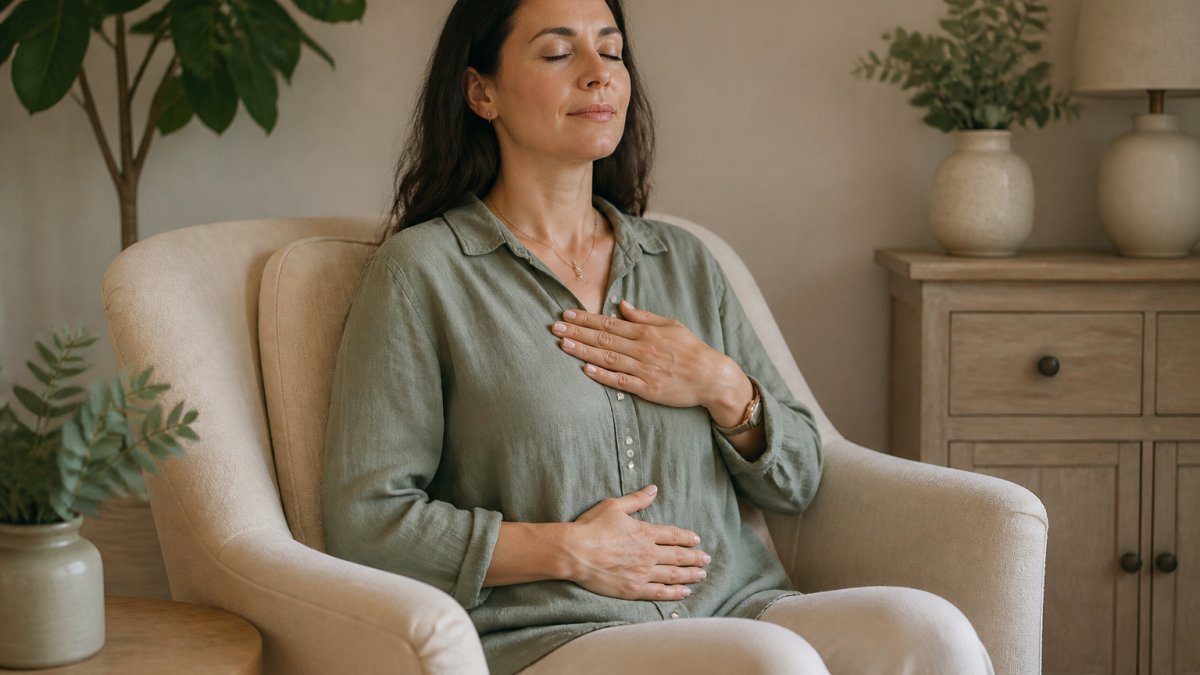
Diaphragmatic breathing means breathing from your belly rather than your chest. Place one hand on your belly. Breathe so the hand rises, not your shoulders.
Try this pattern:
- Breathe in through your nose for a count of four
- Hold gently for a count of four
- Breathe out slowly for a count of six
Practice daily when calm. It is much easier to use a skill you already know.
6. Lifestyle Changes, Supplements, and Safety Considerations
Daily habits shape how easily your body tips into panic. Small, steady changes often beat one big overhaul, but the evidence behind each habit varies, it is worth knowing which carry real weight for panic disorder specifically.
Exercise, Sleep, Diet, and Caffeine
- Exercise: Regular aerobic movement lowers baseline arousal and improves mood. For panic, the useful part is the repeated, safe exposure to a racing heart and heavy breathing, a brisk walk, bike ride, or swim teaches your body these sensations are normal and recoverable. Aim for most days, starting smaller than you think you need.
- Sleep: Poor sleep lowers the threshold for panic and makes attacks feel more intense. Keep a steady bedtime and wake time, limit screens before bed, and avoid alcohol as a sleep aid, it fragments sleep in the second half of the night.
- Caffeine: Caffeine and other stimulants can trigger or worsen panic symptoms in a dose-dependent way. Cutting back, or switching to decaf after noon, reduces attack frequency and intensity for many people. Nicotine and some decongestants have similar effects.
Herbal Supplements and Vitamin B: What to Know Before You Buy
Some people try herbal supplements, essential oils, or a vitamin B complex. These are complementary approaches, not replacements for treatment, and the evidence for panic disorder is much thinner than for therapy or exercise.
A few safety points that matter more than the marketing:
- Supplements can interact with medications. St. John’s wort affects how the body processes many prescription drugs, including some antidepressants and birth control. Kava has been linked to liver injury, and valerian can add to the effects of sedatives. Tell your doctor and pharmacist everything you take.
- Quality varies widely. In the U.S., supplements are regulated as food, not drugs, so they need not prove effectiveness before sale. Look for third-party testing labels such as USP, NSF, or ConsumerLab, and be skeptical of blends hiding amounts behind a “proprietary formula.”
- “Natural” does not always mean safe. Some herbs are risky in pregnancy, before surgery, or alongside blood thinners. If you are pregnant, breastfeeding, or managing another condition, treat supplements as a conversation with your clinician.
- Watch for stimulant-like ingredients. Some “calming” blends contain caffeine-adjacent compounds or high-dose niacin that can trigger flushing and a racing heart, the opposite of what you want.
Comparing Your Options Honestly
It helps to see these side by side, because they are not interchangeable:
| Approach | Time to Benefit | Typical Cost | Access | Best Role |
|---|---|---|---|---|
| Exercise | Weeks | Free to low | Anywhere | Foundation |
| Sleep and diet changes | Weeks | Low | Anywhere | Foundation |
| Caffeine reduction | Days to weeks | Free | Anywhere | High-yield trigger control |
| Breathing retraining | Minutes to weeks | Free | Self or therapist | In-the-moment skill |
| Supplements | Variable, often unclear | $10-$40 per month | Retail or online | Optional add-on |
Costs vary by brand and dose, and insurance rarely covers supplements. Many insurance plans, however, cover therapy visits, and community clinics and employee assistance programs often provide low- or no-cost sessions.
The National Center for Complementary and Integrative Health advises talking with a healthcare provider before starting any supplement, especially if you take prescription medication.
Supplements may support your overall routine, but none replace therapy or medical care for panic disorder. Use them as an add-on, not a substitute, and never stop or change a prescribed medication without talking to your prescriber first.
7. When to Seek Professional Care (and When to Seek Help Urgently)
Seek help urgently if you have thoughts of harming yourself or others.
For ongoing care, the Substance Abuse and Mental Health Services Administration offers treatment locators and support.
At Penny For Your Thoughts Counseling Florida, LLC, we offer a free 20-minute consultation. We also provide virtual reality therapy and a calm, spa-like space built for healing.
If you are thinking about changing or stopping a medication, talk with your prescriber first. Never stop suddenly on your own.
Panic disorder can feel like it runs your life, but it does not have to.
Frequently Asked Questions
Can panic disorder be treated without medication?
Yes. For many people, panic disorder alternatives like cognitive behavioral therapy and exposure therapy work as well as or better than medication, especially for long-term relief. CBT teaches you to change the thoughts and behaviors that fuel panic, while exposure therapy helps your body learn that the sensations are not dangerous. Lifestyle changes such as regular exercise, better sleep, and cutting caffeine can also reduce how often panic attacks happen. A licensed therapist can help you decide whether a non-medication approach fits your situation.
How can I stop a panic attack without medication?
Start with slow diaphragmatic breathing: inhale through your nose for a count of four, hold for four, and exhale for six. This slows your heart rate and signals safety to your nervous system. Grounding techniques, like naming five things you can see or pressing your feet firmly into the floor, can interrupt the spiral. Remind yourself that the attack will pass and is not dangerous. Practicing these skills when you are calm makes them easier to use during an actual attack.
Can breathing exercises really help with panic attacks?
Breathing exercises for panic attacks target the hyperventilation that drives many physical symptoms. When you breathe slowly and from your diaphragm, you reduce carbon dioxide loss and avoid the lightheadedness and chest tightness that can escalate fear. The key is regular practice, not just using them mid-attack. Try five minutes of slow breathing daily so the skill becomes automatic when you need it most.
What therapy works best for panic disorder?
CBT for panic disorder has the strongest evidence base. It combines cognitive restructuring (challenging catastrophic thoughts like “I’m having a heart attack”) with exposure therapy for panic attacks, where you gradually face feared sensations and situations. This dual approach helps you break the avoidance cycle that keeps panic disorder going. Many people see meaningful improvement in 8 to 12 sessions. A licensed mental health professional can tailor the approach to your specific triggers and history.
Recent Comments